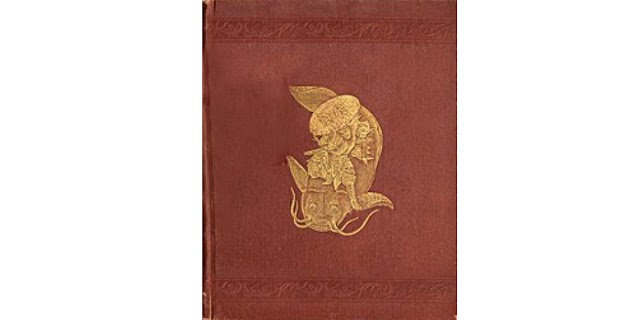

Japanese Fairy World
Báo tài liệu không phù hợp
Xem trước nội dung
Project Gutenberg's Japanese Fairy World, by William Elliot Griffis
This eBook is for the use of anyone anywhere at no cost and with
almost no restrictions whatsoever. You may copy it, give it away or
re-use it under the terms of the Project Gutenberg License included
with this eBook or online at
Title: Japanese Fairy World
Stories from the Wonder-Lore of Japan
Author: William Elliot Griffis
Illustrator: Ozawa
Release Date: July 6, 2009 [EBook #29337]
Language: English
*** START OF THIS PROJECT GUTENBERG EBOOK JAPANESE FAIRY WORLD ***
Produced by Delphine Lettau, Jen Haines and the Online
Distributed Proofreading Team at
HOW THE SUN-GODDESS WAS ENTICED OUT OF HER CAVE.
JAPANESE
FAIRY WORLD.
STORIES FROM THE WONDER-LORE OF JAPAN.
BY
WILLIAM ELLIOT GRIFFIS,
AUTHOR OF "THE MIKADO'S EMPIRE."
ILLUSTRATED BY OZAWA, OF TOKIO.
LONDON:
TRÜBNER & CO., LUDGATE HILL.
1887.
PREFACE.
The thirty-four stories included within this volume do not illustrate
the bloody, revengeful or licentious elements, with which Japanese
popular, and juvenile literature is saturated. These have been
carefully avoided.
It is also rather with a view to the artistic, than to the literary,
products of the imagination of Japan, that the selection has been
made. From my first acquaintance, twelve years ago, with Japanese
youth, I became an eager listener to their folk lore and fireside
stories. When later, during a residence of nearly four years among
the people, my eyes were opened to behold the wondrous fertility of
invention, the wealth of literary, historic and classic allusion, of pun,
myth and riddle, of heroic, wonder, and legendary lore in Japanese
art, I at once set myself to find the source of the ideas expressed in
bronze and porcelain, on lacquered cabinets, fans, and even crape
paper napkins and tidies. Sometimes I discovered the originals of the
artist's fancy in books, sometimes only in the mouths of the people
and professional story-tellers. Some of these stories I first read on
the tattooed limbs and bodies of the native foot-runners, others I first
saw in flower-tableaux at the street floral shows of Tokio. Within
this book the reader will find translations, condensations of whole
books, of interminable romances, and a few sketches by the author
embodying Japanese ideas, beliefs and superstitions. I have taken no
more liberty, I think, with the native originals, than a modern story-
teller of Tokio would himself take, were he talking in an American
parlor, instead of at his bamboo-curtained stand in Yanagi Cho,
(Willow Street,) in the mikado's capital.
Some of the stories have appeared in English before, but most of
them are printed for the first time. A few reappear from The
Independent and other periodicals.
The illustrations and cover-stamp, though engraved in New York by
Mr. Henry W. Troy, were, with one exception, drawn especially for
this work, by my artist-friend, Ozawa Nankoku, of Tokio. The
Trên đây là phần đầu tài liệu — bấm Đọc sách để xem đầy đủ.